Understanding Impact Measurement and Management (IMM)
What is IMM?
Impact measurement and management includes identifying and considering the positive and negative effects one's business actions have on people and the planet in both short and long term, and then figuring out ways to mitigate the negative and maximize the positive in alignment with one's goals1.
Purpose for conducting IMM
Internally for:
- Setting direction for impact creation
- Assessing progress of the projects
Externally for:
- Reporting to funders, investors
- Creating transparency and credibility
- Marketing
Key steps in IMM
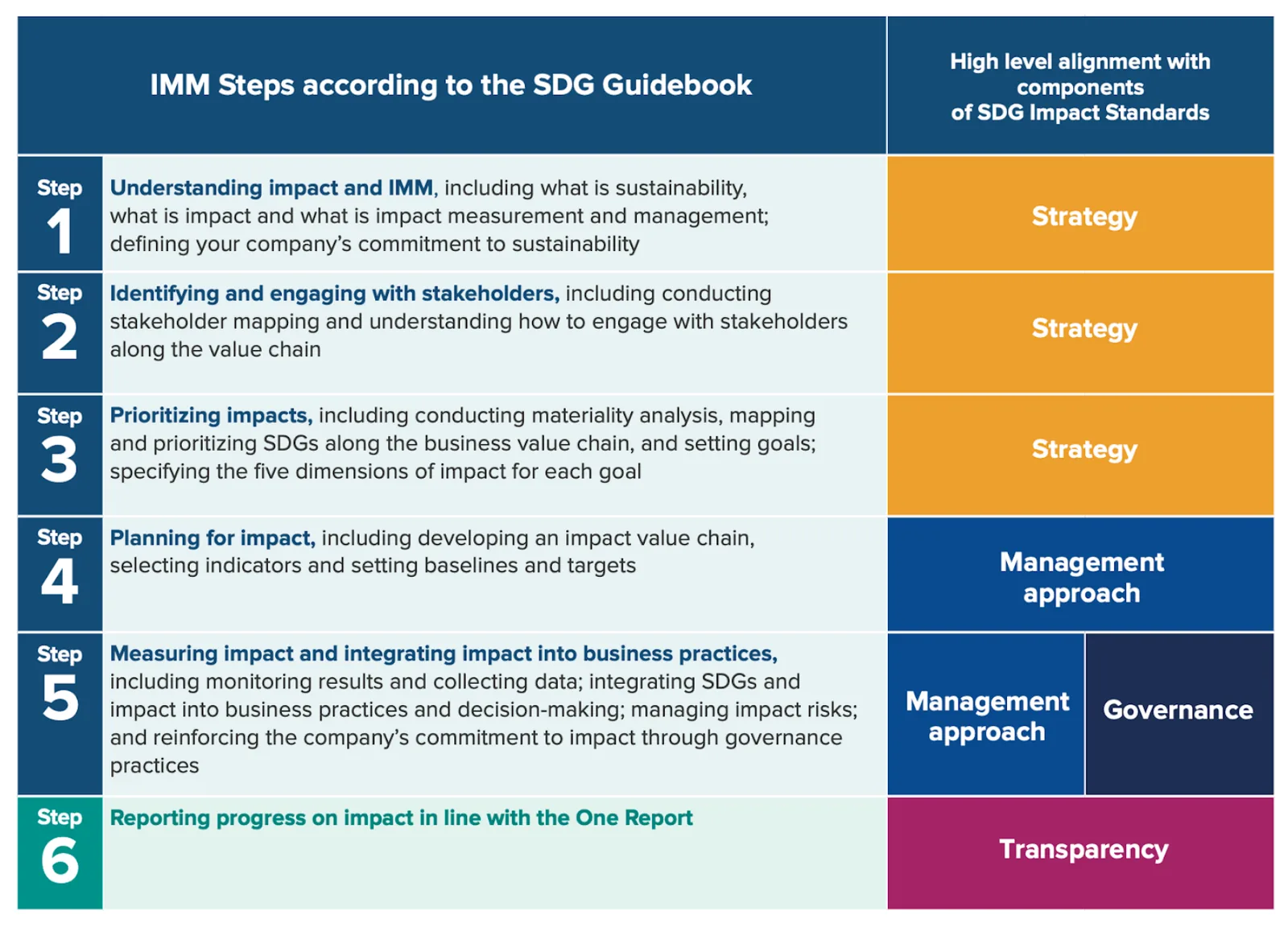
1. Understanding impact and IMM
Understand the key concepts of sustainability, impact, impact measurement and management and define the organization's commitment to impact
2. Identifying and engaging with stakeholders
Conduct stakeholder mapping and understand how to engage stakeholders along the value chain
3. Prioritize impacts
Conduct materiality analysis, map and prioritize SDGs along the value chain, set impact goals and specify the five dimensions of impact for each goal, namely what, who, how much, contribution and risk
4. Planning for impact
Develop an impact value chain, select indicators for measurement and set baselines and targets
5. Measuring impact and integrating impact into organization practices
Monitor results and collect data; integrate SDGs and impact into organization practices and decision-making; managing impact risks; and reinforcing the organization's commitment to impact through governance practices
6. Report progress on impact
How is IMM linked to the SDG Impact Standards?
The SDG Impact Standards were developed by the United Nations Development Program (UNDP) to bridge the knowledge gap among private sector organizations on how they could effectively integrate the SDGs into all business and investment decision-making processes in order to operate more sustainably and make positive contributions to the SDGs.
The Standards are decision-making standards that provide a common language and shared approach for the integration of impact management and SDGs into decision-making. The Standards are organized around 4 interconnected themes - strategy, management approach, transparency, and governance. (Read further)
- Standard 1 (Strategy): embed sustainability and the SDGs in the organization’s purpose and strategy and set challenging but achievable impact targets
- Standard 2 (Management Approach): Integrate impact management into the organization’s management approach to enhance participation in sustainable development and effectively achieve the SDGs
- Standard 3 (Transparency): The organization discloses how it supports sustainable development and achieves the SDGs through its management approach and reporting on its operations
- Standard 4 (Governance): The corporate governance process is committed to promoting participation in sustainable development
Impact Measurement and Management constitutes the basis of the specific guidelines and principles outlined in the SDG Impact Standards, which provides a structured framework for organizations to identify, assess and manage their impacts in the context of SDGs.
How is Impact Flow linked to the Five Dimensions of Impact by Impact Management Project?
The five dimensions of impact were developed by the Impact Management Project (IMP), now Impact Frontiers, as a set of globally accepted norms on how to understand, manage and communicate impact. The five dimensions of impact, namely What, Who, How much, Contribution and Risk, together form the building blocks for an organization's impact management framework. (Read further)
As an IMM tool, Impact Flow has incorporated these dimensions to support effective measurement, management and communication of impact.
| Dimension of Impact | Part relevant in Impact Flow |
|---|---|
What Outlines what outcomes the organization is contributing to, whether it is positive or negative, and how important the outcome is for the people affected and the planet |
|
Who Identifies who are affected by the organization's interventions, how much they were overlooked considering the outcomes |
|
How much Captures the extent of the impact across scale, depth and duration.
|
|
Contribution Assesses to what extent the intervention contributed to the outcome achieved. Would change have occurred without the organization's intervention? There may be multiple organizations and projects contributing to the same set of outcomes. By understanding the system one operates in, organizations can optimize the entire system for more effective outcomes. An organization's contribution can be estimated using stakeholder feedback and data from market research. | |
Risk Identifies risks that could impact people and the planet if the intended outcomes are not achieved, as organizations may face, both internal and external factors during the process of impact creation which may cause the outcomes to deviate from what is expected. Therefore, it is important to establish procedures to assess and mitigate these risks. |
|
Understanding Impact
Impact is a change in an outcome, which in general refers to the level of well-being experienced by a group of people or the natural environment, caused by an organization.
Impact can be positive or negative, intended or unintended, direct or indirect.
Understanding and defining 'impact' is a critical first step in contributing to societal and environmental well-being. It shapes how an organization aligns its products or services to create positive changes, influencing both its actions and how success is perceived by the organization and its stakeholders.
Understanding Sustainable Development Goals (SDGs)
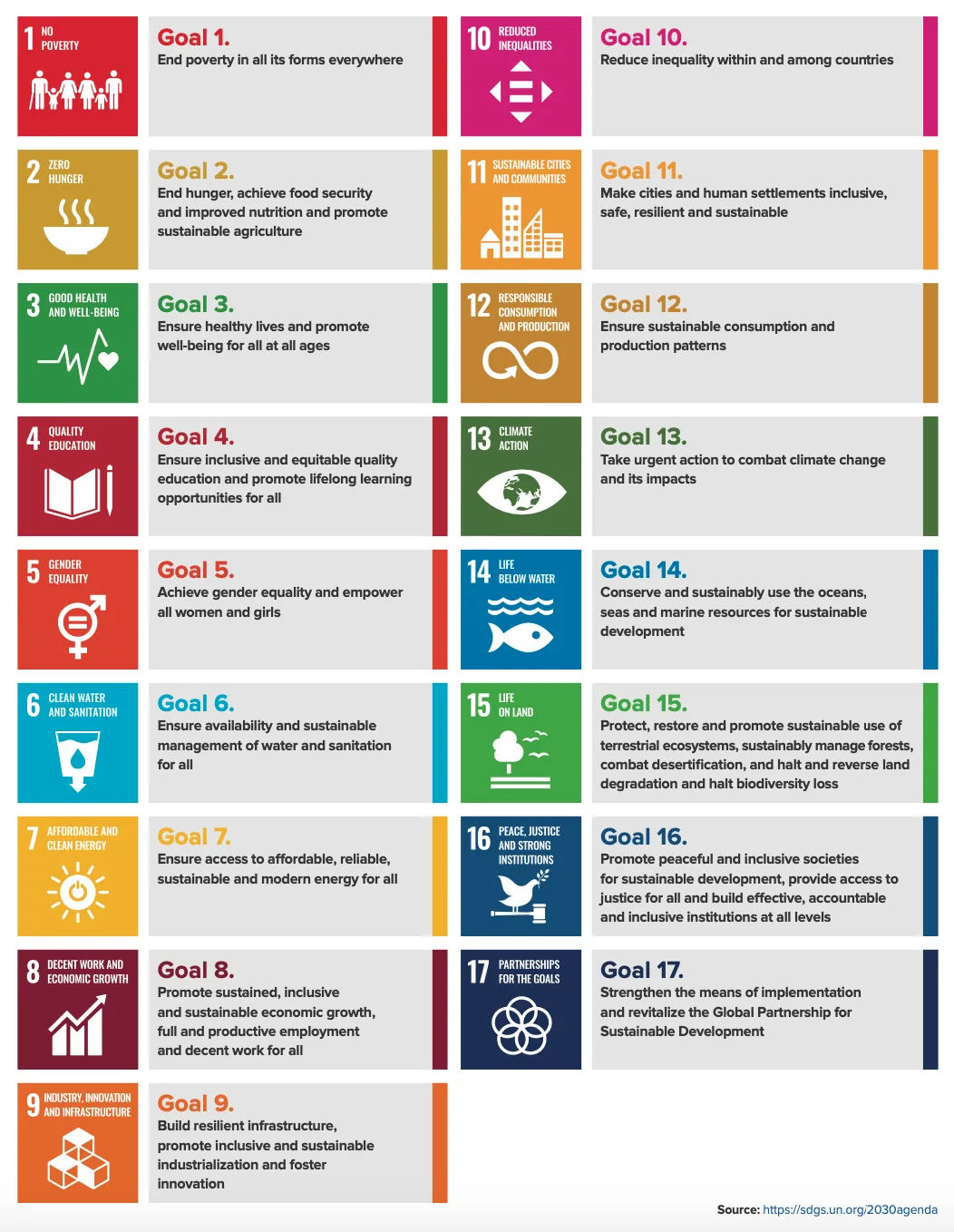
The Sustainable Development Goals (SDGs) were adopted by all member states of the United Nations in 2015 as a universal call to action to end poverty, protect the planet, and ensure that by 2030 all people enjoy peace and prosperity.
There are a total of 17 goals which comprehensively address the global challenges we face including poverty, inequality, climate change, environmental degradation, and peace and justice. (Read further) The SDGs apply to all countries - developed and developing.
Committing to SDGs prompts organizations to be more vigilant towards risks in their strategy and operation that may affect long term sustainability. At the same time, it unlocks significant market opportunities. Research consistently shows that consumers, particularly younger generations, are increasingly drawn to brands that demonstrate responsibility toward society and the environment. Likewise, socially and environmentally responsible investing has surged worldwide in recent years, creating vast opportunities for businesses and investors that align with and actively contribute to the achievement of SDGs.
Furthermore, with SDGs being a globally recognized and standardized framework of impact, aligning impact with the SDGs would allow organizations to communicate their contributions to societal and environmental well-being in a language that is universally understood, transcending borders, cultures and industries.
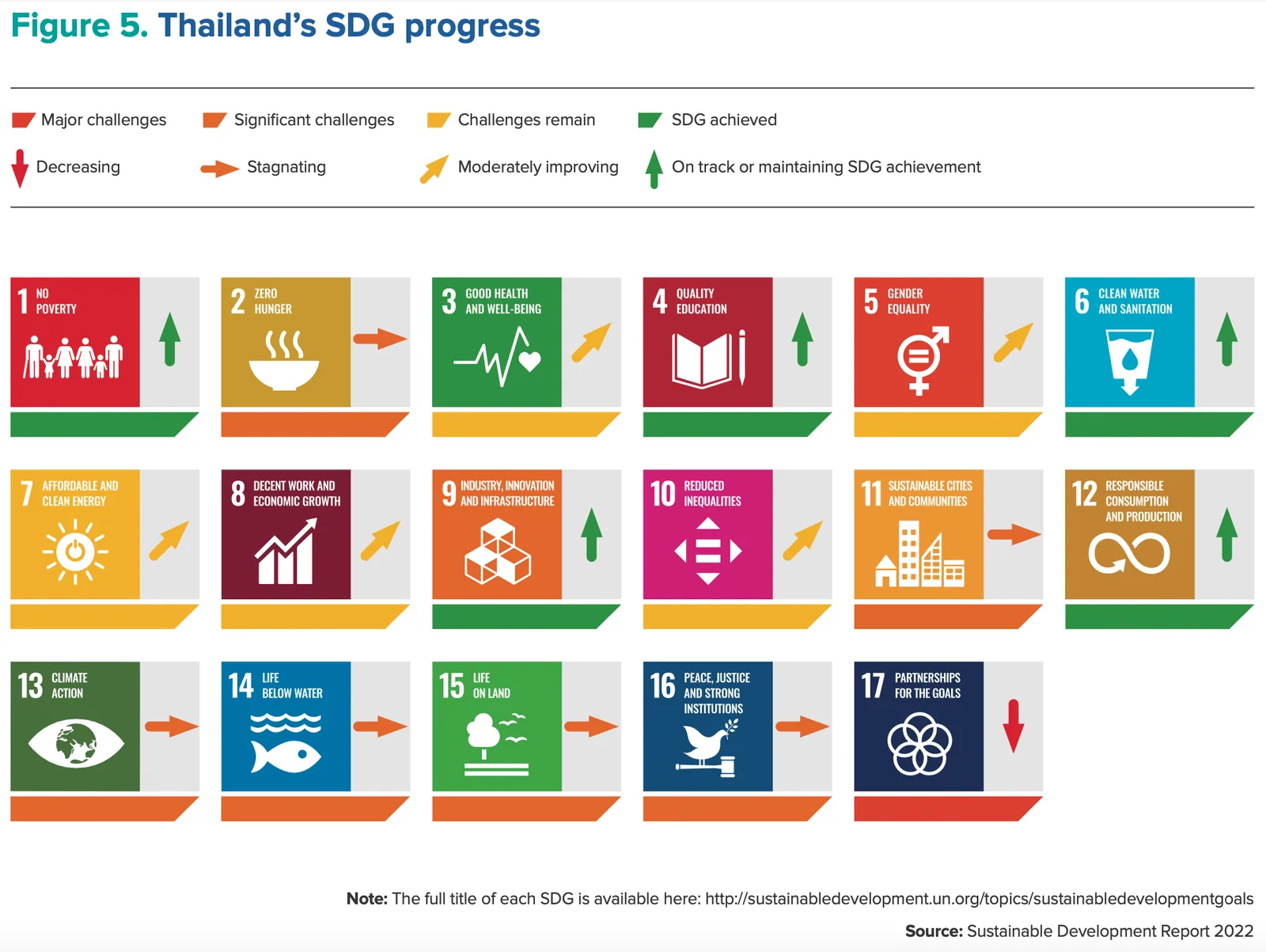
According to the Sustainable Development Report 2022 by the United Nations, Thailand has an SDG Index Rank of 44 out of 163 countries, and an overall score of 74.13/100. The following figure illustrates the latest status of each SDG in Thailand, whether the progress is on track, moderately improving, stagnating or decreasing.
Identify stakeholders
In the context of Impact Measurement and Management (IMM), stakeholders refer to individuals, groups, organizations, or entities that have an interest or are affected by the activities of the organization, such as business operation, investment, or project. It also includes those who have an influence on the organization's activities.
Stakeholders can be both internal or external to the organization. Here are a few examples:
| Internal stakeholders | External stakeholders |
|---|---|
|
|
There are a few ways to identify stakeholders involved.
1) Identify stakeholders and create a stakeholder map based on the impact goal and problems to be solved
Begin by listing all relevant stakeholders, including:
- Those already affected
- Those likely to be affected in the future
- Those who may have been overlooked or whose voices have not been adequately heard
Stakeholders may include individuals, groups, shareholders, organizations, local communities, suppliers, government agencies, and even non-human entities such as nature and the planet. The aim is to ensure a comprehensive and inclusive understanding of all parties with a stake in the issue.
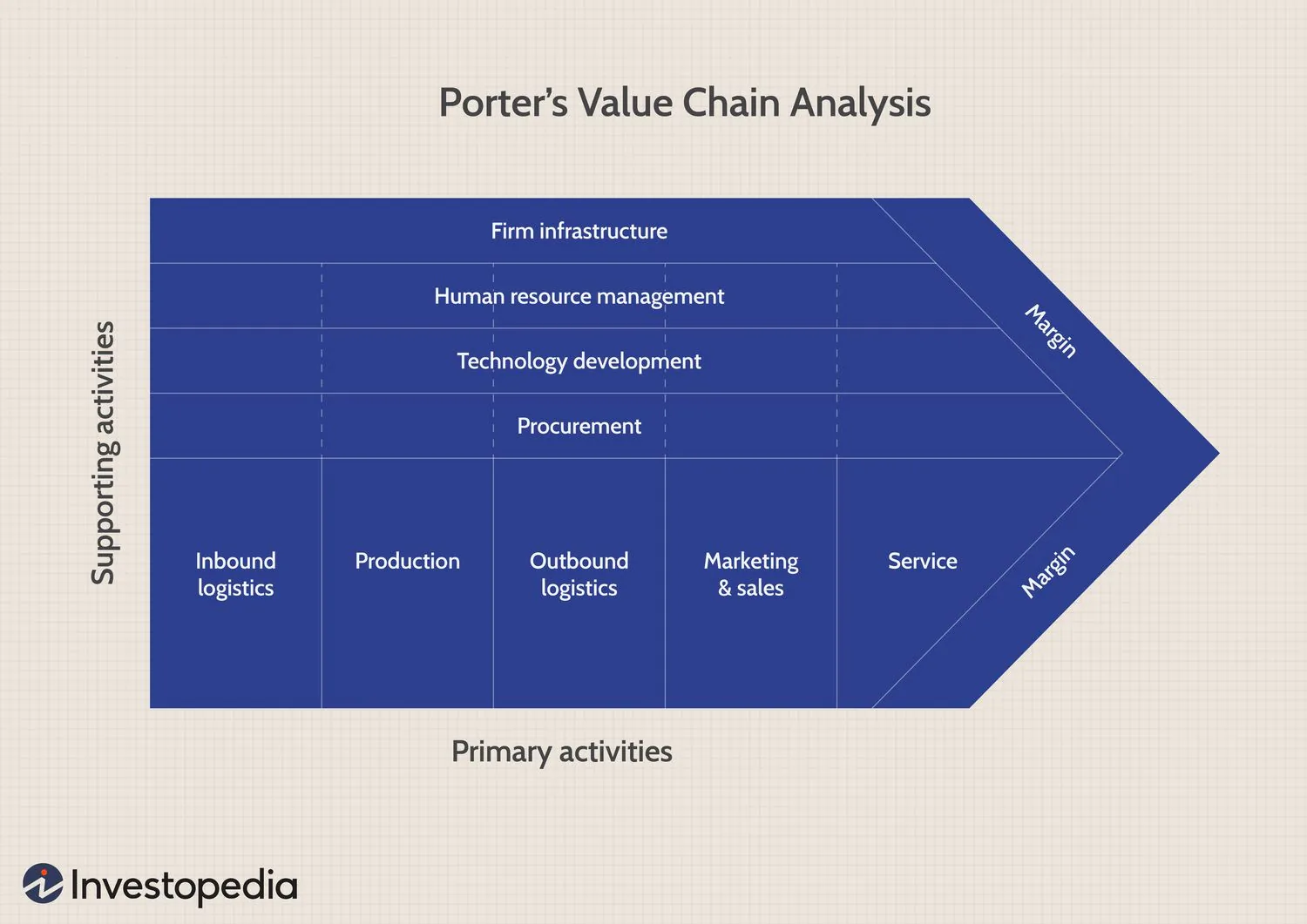
2) Map the organization's value chain and identify stakeholders involved in each part of the value chain
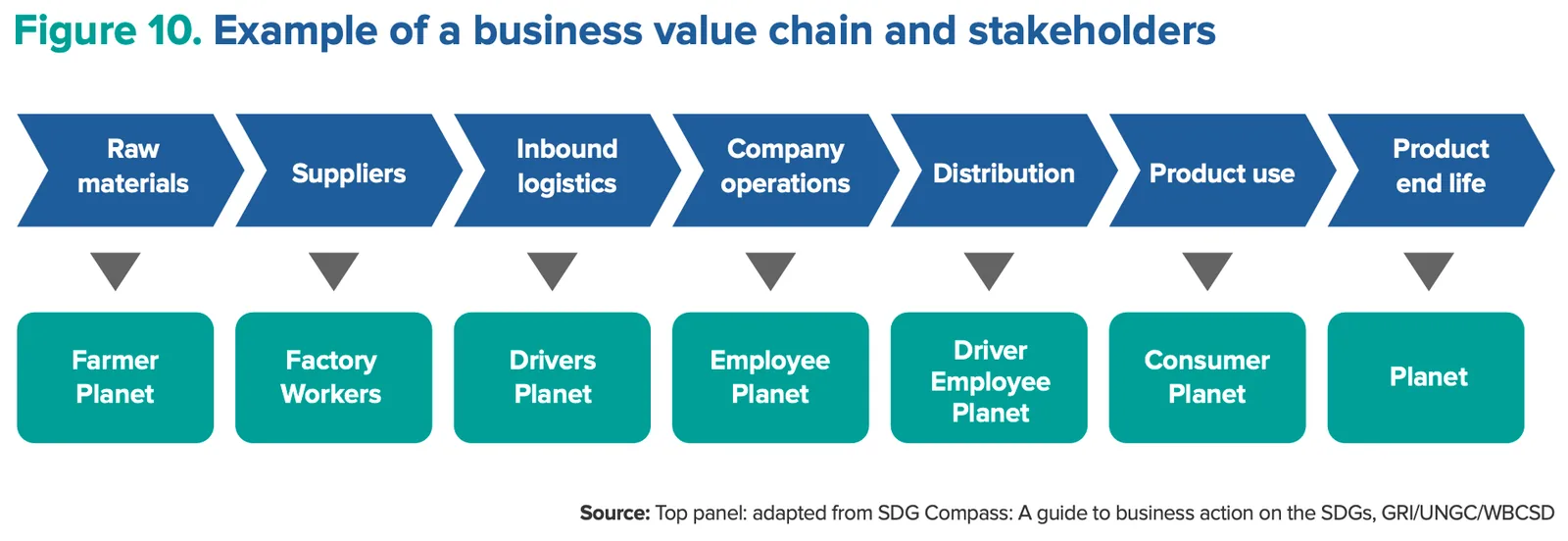
Develop a comprehensive value chain map that covers all key processes—from the supply base and inbound logistics, through production and operations, to distribution, product use, and end-of-life management. At each stage, identify stakeholders who are positively or negatively affected. This mapping process enables the organization to pinpoint where significant impacts—both positive and negative—are likely to occur, particularly in areas of high concern to stakeholders.
Here is an example of a business value chain and key stakeholders that are/could be impacted at each point of the chain (SEC and UNDP. SDG Guidebook for Thai Listed Companies. p.22).
3) Identify both stakeholders who are directly and indirectly impacted
It is usually obvious who are the direct beneficiaries of the intervention. Look out for groups that may be indirectly impacted, both positively and negatively. Such groups are usually closely associated with those who are directly impacted and a change in the latter is likely to affect them as well.
Materiality analysis
An intervention will result in many different outcomes for many people and a reporting organization cannot manage and account for all of them. Materiality analysis assists organizations in discerning the key stakeholders for taking into account for analysis as well as outcomes and impacts that matter most to the stakeholders and the organization.
Materiality is mainly determined by relevance and significance.
Relevance - judgment depends on to what degree the following is aligned with the organization's goals
- Who experiences outcomes?
- What outcomes do they experience?
Significance - assessed by the scale of the outcomes
- How many people were (or will be) changed?
- How much change happens (or is expected to happen) for each person and for how long?
- How much of the change is caused by the activity as opposed to other factors?
- At what level does the stakeholder consider the outcome as a positive outcome? Is there a threshold that determines significance?
There are also other factors that affect materiality, for example
- Stakeholders perceive the outcomes as important to them
- The organization has a policy to include the stakeholder/outcome
- There are existing social norms that demand it
- There are financial consequences to the organization for not including the stakeholder/outcome in its analysis
Select Indicators for Measuring and Monitoring Results
Identify the most appropriate indicators for each output and outcome. It is possible to have multiple indicators for the same outcome. So choose the one that is most reflective of the intended impact and also cost-effective in terms of data collection.
Based on the indicators selected, identify the source of data, time intervals for collection and the person-in-charge for each indicator.
Here are some indicator sources for reference:
International indicators:
- Global indicator framework for the Sustainable Development Goals and targets of the 2030 Agenda for Sustainable Development
- IRIS 5.3 Taxonomy (The complete version of the IRIS 5.3 Standards, released in June 2022)
- IRIS+ alignment with the SDGs
- BCtA (Business Call to Action) indicators
Thailand indicators:
Impact Value Chain
The impact value chain helps provide a framework to show how impact is created with respect to the various stakeholders involved. It outlines how activity, output, outcome and impact are linked in a logical manner and provides a basis for data collection and analysis.
The stakeholder-oriented approach increases ease of rechecking whether the stakeholder’s needs, activities to be executed and the expected outcomes are aligned.
Here are the key components of an impact value chain.
| Stakeholder | Activity | Output | Outcome | Impact | |
|---|---|---|---|---|---|
| Definition | Persons or groups who are directly or indirectly affected by an intervention, as well as those who may have stakes in the project and/or the ability to influence its outcome, either positively or negatively. | The interventions taken to address the problems and needs of the stakeholder or the activities that stakeholders have to participate in. | The immediate, short-term results or changes based on the activity stated. | The mid- to long-term expected outcomes as a result of the output stated. | The ultimate impact the organization aims to achieve or how the end goal is envisioned. |
Conceptual framework of Impact Flow per different impact themes (example)
| Impact theme | Sustainable agriculture | Education | Health & well-being |
|---|---|---|---|
| Problem | Practice of unsustainable farming practices that use chemical fertilizers and pesticides excessively which causes soil degradation, loss of biodiversity and ultimately compromise long term food and income security | Youths drop out from schools due to economic difficulties at home but at the same time lack job skills to secure employment | Elderly living in poverty often have difficulties accessing basic healthcare services and support from family, which increases their health risks |
| Solution | Support farmers to acquire knowledge and equipment needed to transition to sustainable farming practices and connect them with market | Provide vocational skills training per the youths’ interest and match them with jobs or support them to be self-employed | Faciliate the set up of local volunteer network and equip them with knowledge to support the well-being of the elderly, in dimensions such as physical and mental health, access to social welfare, home environment improvement, etc. |
| Impact goal |
| Youths become self-reliant through stable employment and income | Underprivileged elderly able to access basic healthcare service and support in times of need as well as self care knowledge which helps to reduce health risks |
| Related SDGs | 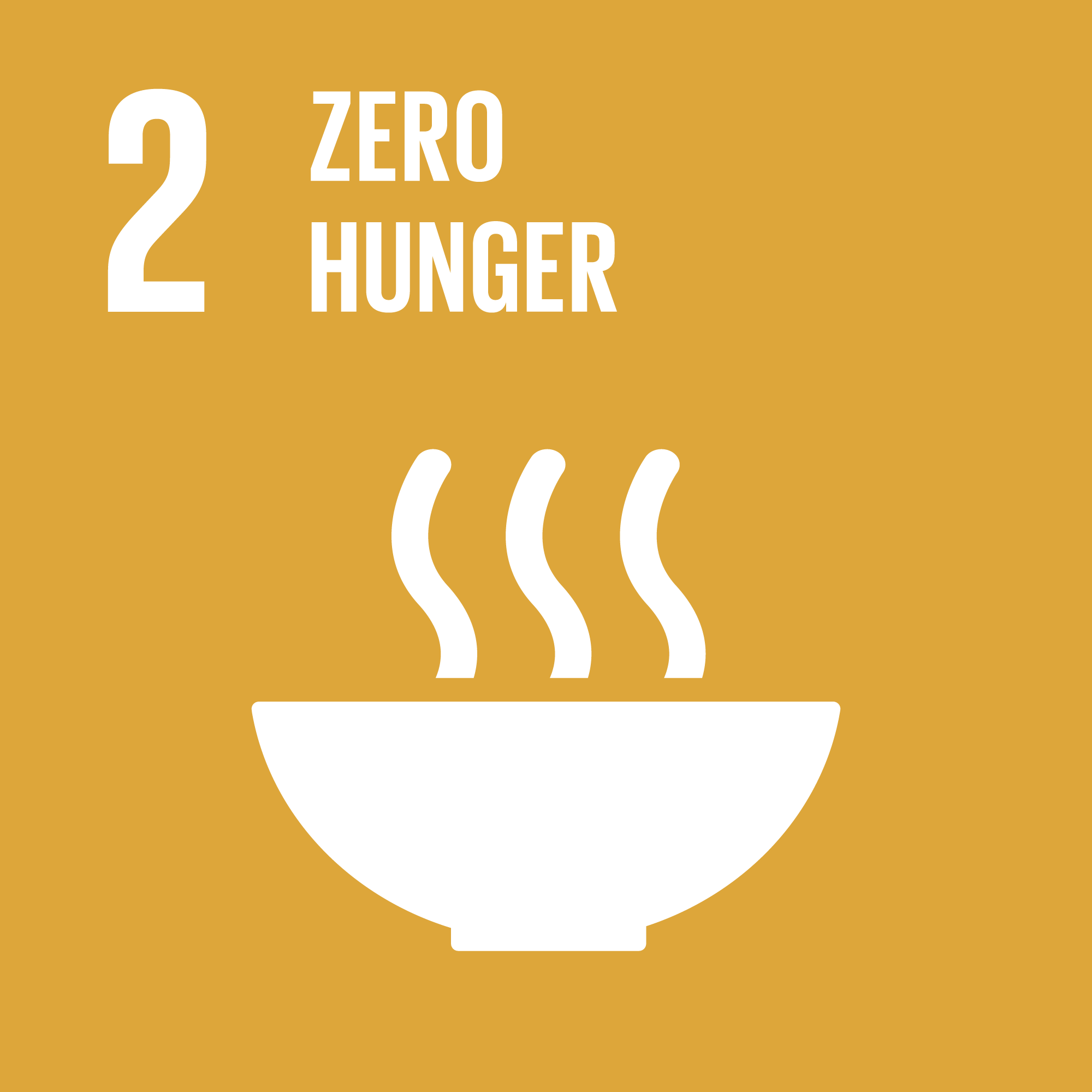 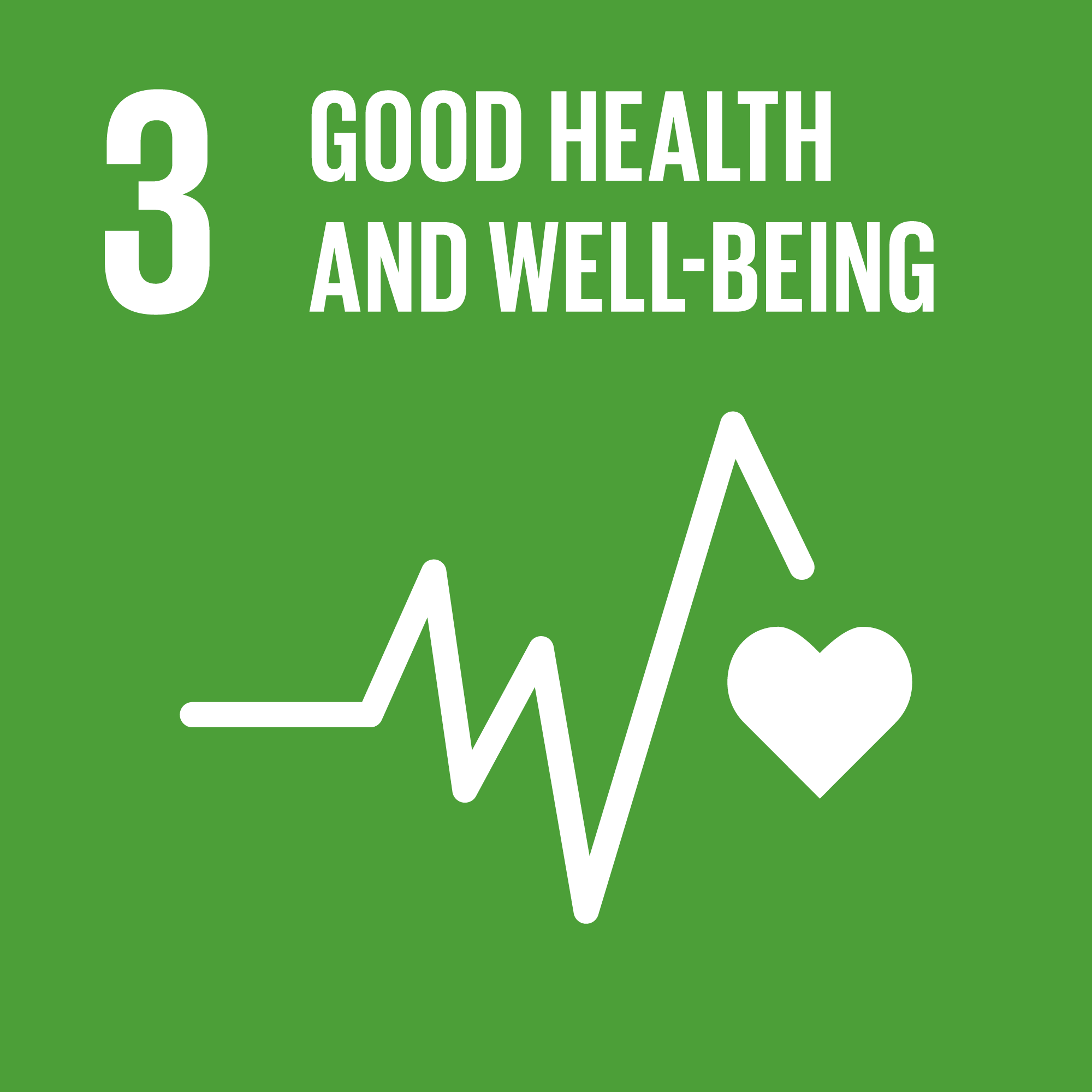  2.2, 2.4, 3.9, 15.5 |   4.4, 8.5, 8.6 | 3.4, 3c |
| Stakeholder |
|
|
|
| Input |
|
|
|
| Output |
|
|
|
| Outcome |
|
|
|
| Indicator |
|
|
|